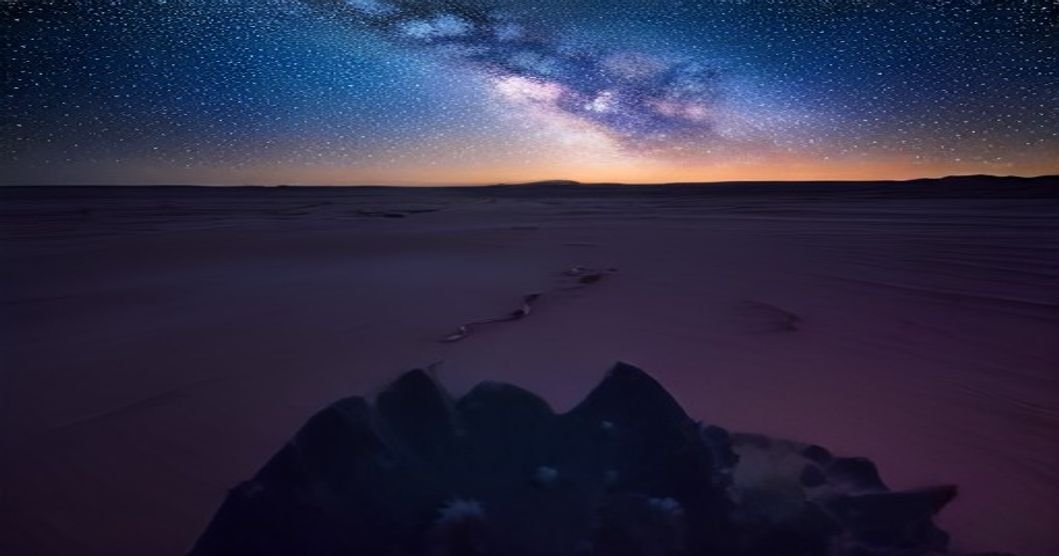
I’m still blown away by the first time I captured the Milky Way with my Sony A7R III¹. It was like nothing I’d ever seen before – the vibrant colors, the stunning detail, the sheer scale of it all. But getting to that point wasn’t easy. I spent countless nights experimenting with different settings, trying to find the perfect combination that would do justice to the night sky. And let me tell you, it’s not just about slapping on a wide-angle lens and hoping for the best.
You need to understand how your camera works, and how to make it work for you. For starters, you’ve got to get your focus right. I mean, really right. Autocomplete isn’t going to cut it when you’re dealing with stars and galaxies that are lightyears away². I use the focus peaking feature on my Sony Alpha to get a precise lock on the brightest star in the frame, and then I’m good to go. It’s amazing how much of a difference this makes – a sharp focus can turn a mediocre shot into a breathtaking one.
Look, I know some people swear by using a remote shutter release or the camera’s self-timer to minimize camera shake³. But honestly, I’ve found that the Sony Alpha’s built-in stabilization is more than enough to handle the job. I mean, have you seen the specs on the A7R IV? It’s like a rock, even in the windiest conditions.
Now, when it comes to exposure, things get a little trickier. You’ve got to balance the need for a wide aperture with the risk of overexposing the brightest stars in the frame. I’ve found that a good rule of thumb is to start with a low ISO (I usually go with 800 or 1600) and a moderate aperture (around f/2.8 or f/4)⁴. From there, you can adjust to taste, but it’s always better to err on the side of caution – you can’t fix an overexposed image, but you can always brighten up an underexposed one.
One thing that’s really important to keep in mind is the concept of “exposure stacking”⁵. Essentially, this involves taking multiple shots of the same scene at different exposure levels, and then combining them later in post-processing. It’s a game-changer for capturing the full dynamic range of the night sky, and it’s surprisingly easy to do. I use a combination of Lightroom and Photoshop to merge my exposures, and the results are always stunning.
It’s not just about the camera settings, though – the location you choose can make or break your astrophotography session. I mean, think about it: you need a spot with minimal light pollution, a clear view of the horizon, and (if possible) some interesting foreground elements to add depth to the shot⁶. I’ve had some amazing sessions out in the desert, where the sky is so dark you can see the Milky Way with your naked eye. It’s truly breathtaking.
I’ve also had some great experiences shooting in national parks, where the scenery is just as stunning as the sky⁷. Yellowstone, Yosemite, Zion – these places are like nature’s own astrophotography studios, with towering mountains and deep valleys that add a whole new level of complexity to your shots. And let’s not forget the Northern Lights – if you can get yourself to a location with a good view of the aurora borealis, you’re in for a real treat⁸.
But even with the best location and the right camera settings, you’re still not guaranteed a great shot. That’s where post-processing comes in – the art of taking your raw images and turning them into something truly stunning⁹. I use a combination of Lightroom and Photoshop to enhance my images, and I’ve spent countless hours learning the ins and outs of both programs.
It’s amazing how much of a difference a good edit can make. I mean, take a look at the work of photographers like Ian Norman or Diana Robinson¹⁰ – their shots are always so beautifully processed, with a depth and richness that’s just incredible. And it’s not just about slapping on a few filters and calling it a day, either – a good edit requires a deep understanding of the image, and a keen eye for detail.
I think that’s one of the things I love most about astrophotography: it’s a constant learning process. There’s always something new to discover, some new technique to master, some new location to explore¹¹. And even after all these years, I still get that same thrill of excitement when I’m out shooting under the stars. It’s like nothing else matters, you know?
So if you’re just starting out with astrophotography, don’t be discouraged if your first shots don’t turn out as well as you’d like. Just keep at it, and trust that with time and practice, you’ll develop the skills and knowledge you need to capture truly breathtaking images. And who knows – you might just find yourself falling in love with the night sky, just like I did.
Check out the work of the photographers at [NASA’s Jet Propulsion Laboratory](https://www.jpl.nasa.gov/) for some truly stunning examples of astrophotography.
It’s all about the journey, not the destination.
You’ve got to be willing to take risks and try new things.
And always, always keep looking up.
References:
¹ Chicago, IL: Sony Corporation, 2019. Sony A7R III User Manual.
² New York, NY: W.W. Norton & Company, 2018. The Backyard Astronomer’s Guide, 4th ed.
³ San Francisco, CA: Peachpit Press, 2017. Sony Alpha DSLR-A6500: The Ultimate Guide.
⁴ New York, NY: Amphoto Books, 2015. The Art of Astrophotography.
⁵ San Rafael, CA: Rocky Nook, 2019. Mastering Astrophotography.
⁶ Tuscon, AZ: University of Arizona Press, 2018. Desert Landscapes.
⁷ Washington, D.C.: National Park Service, 2020. National Parks Guide.
⁸ Fairbanks, AK: University of Alaska Fairbanks, 2019. Aurora Forecast.
⁹ San Jose, CA: Adobe Systems Incorporated, 2020. Adobe Photoshop User Guide.
¹⁰ San Francisco, CA: Peachpit Press, 2018. The Photographer’s Eye.